
LUMO: Technical Specifications
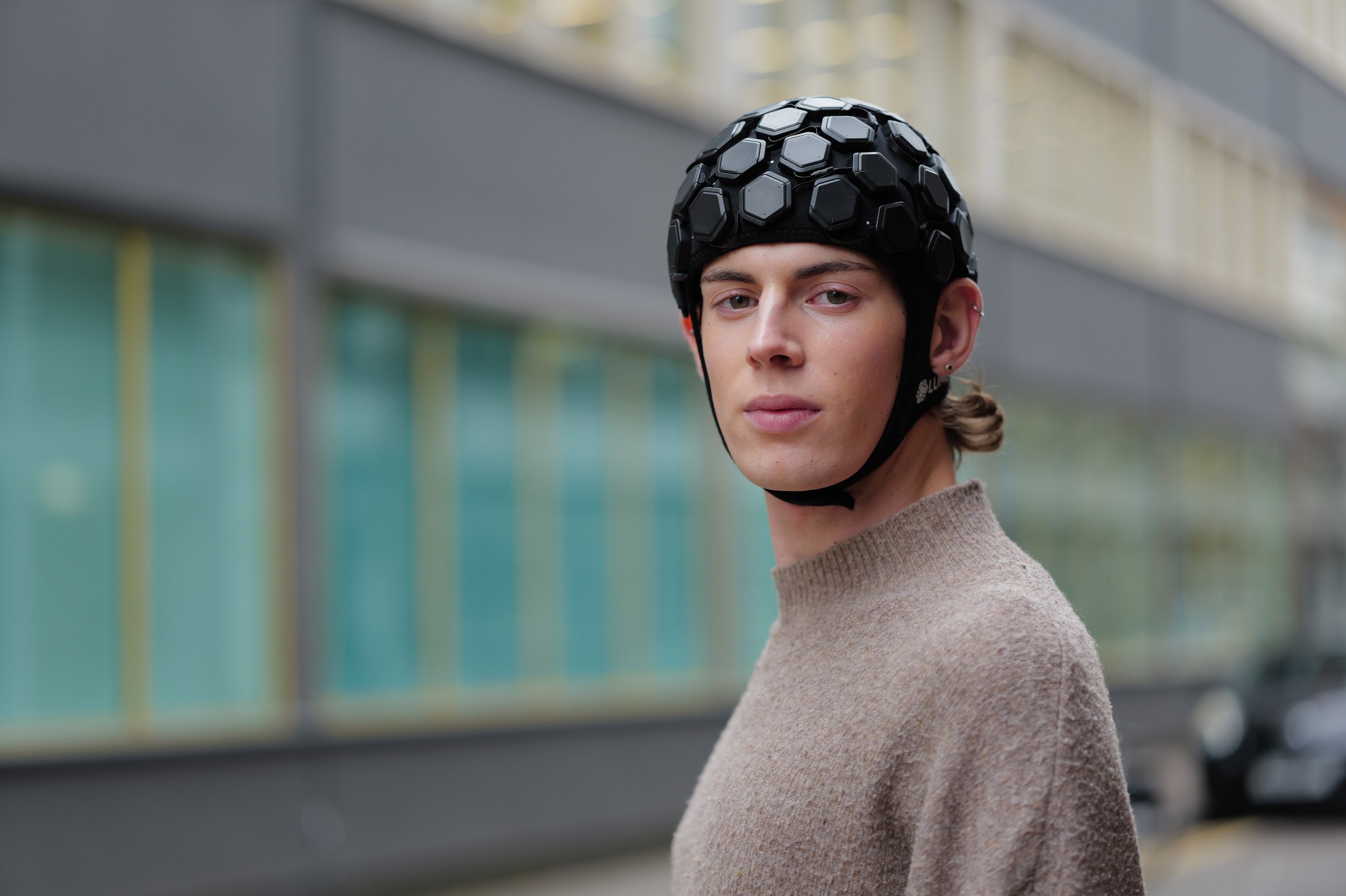
LUMO is the world’s fastest and lightest whole-head high-density diffuse optical tomography (HD-DOT) system.
Explore detailed specifications and a range of example system configurations below.
At a glance
High-resolution functional neuroimaging with a spatial resolution comparable to fMRI, enabled by thousands of overlapping and multidistance channels
Accurately remove physiological noise across the whole field of view using a dense network of short separation channels
Image subjects of all ages, with cortical coverage ranging from single-region to whole head
Maximise your research budget with a substantially lower cost per channel compared to low-density systems
Significantly reduce motion artefacts thanks to a fibreless, low-profile headgear design

Ultra-high dynamic range
Our 120 dB dynamic range enables source-detector separations between 10–70 mm
Dense channel arrays
Up to 162 sources and 216 detectors, yielding greater than 7000 channels in typical layouts

Lightweight headgear
Headbands from 80 g, up to 810 g for
whole-head adult caps

High speed data acquisition
High-density imaging at up to
12.5 frames per second
Example configurations
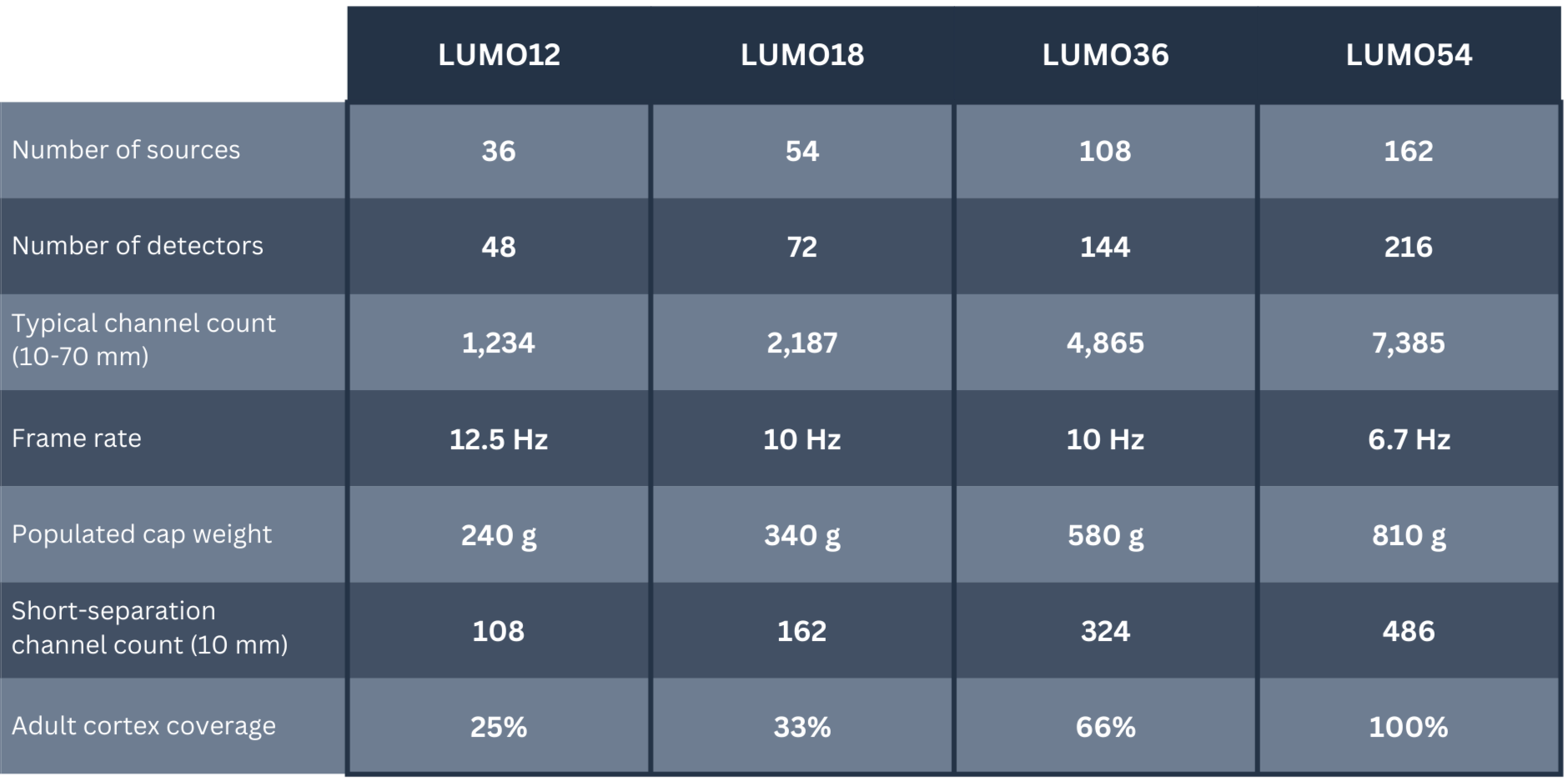
Every cap is custom-designed and built to order based on your specific regions of interest. Dock arrays can be partially or fully populated with tiles, enabling single or multi-region imaging. Compare key specifications across different system configurations in this table.
Contact us for a tailored quote or system demonstration.
Headgear features
No bulky fibres or harnesses: Connects via a lightweight 2 m cable
Custom layouts: Target specific regions of interest with between 3 and 54 docks per cap
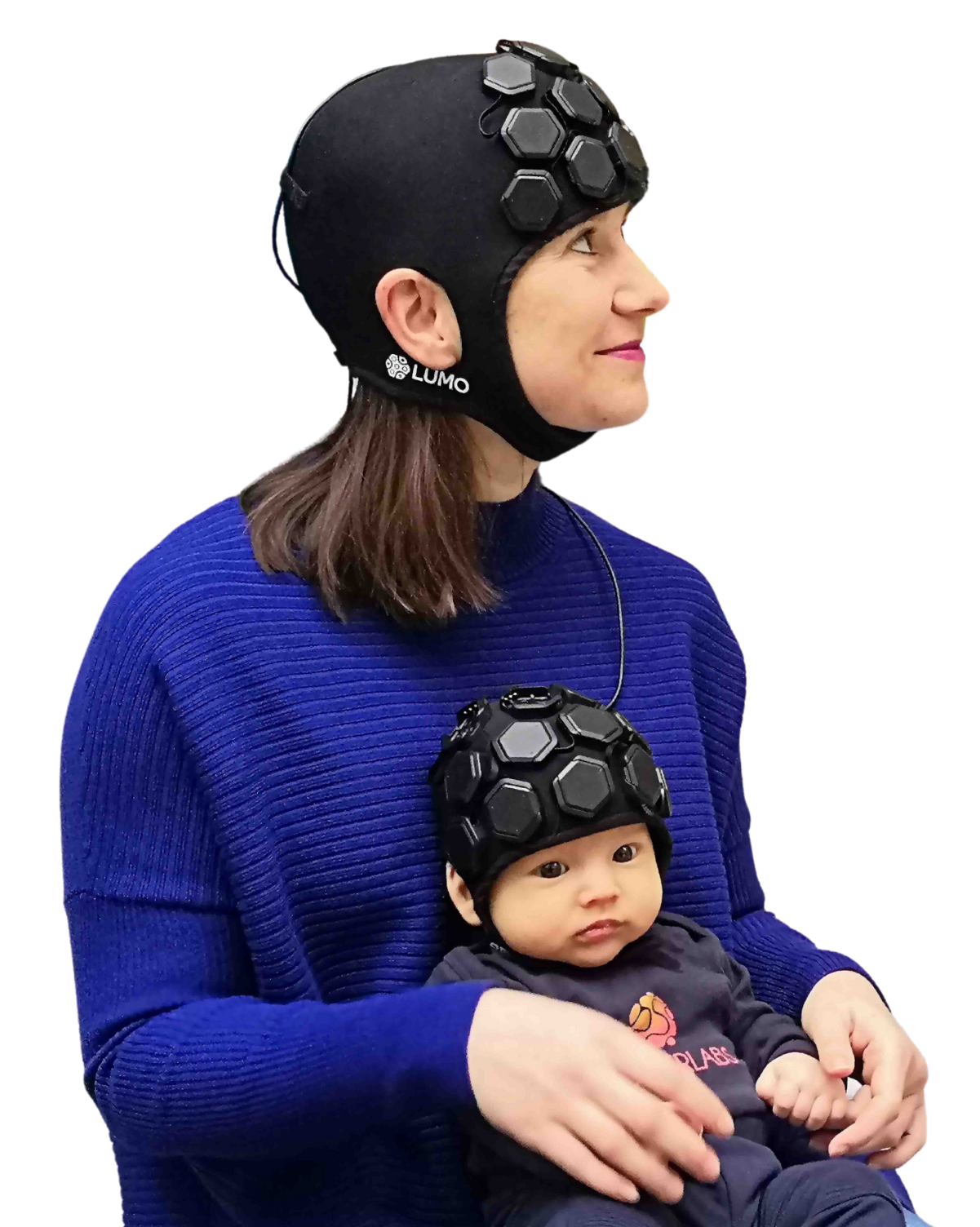
Comprehensive sizing: Available in all sizes, from neonate to adult
Bespoke modifications: Tailor your headgear to specific experimental setups with cut-outs and velcro straps
Made to order: All caps are made to order in our workshop, based on your exact requirements
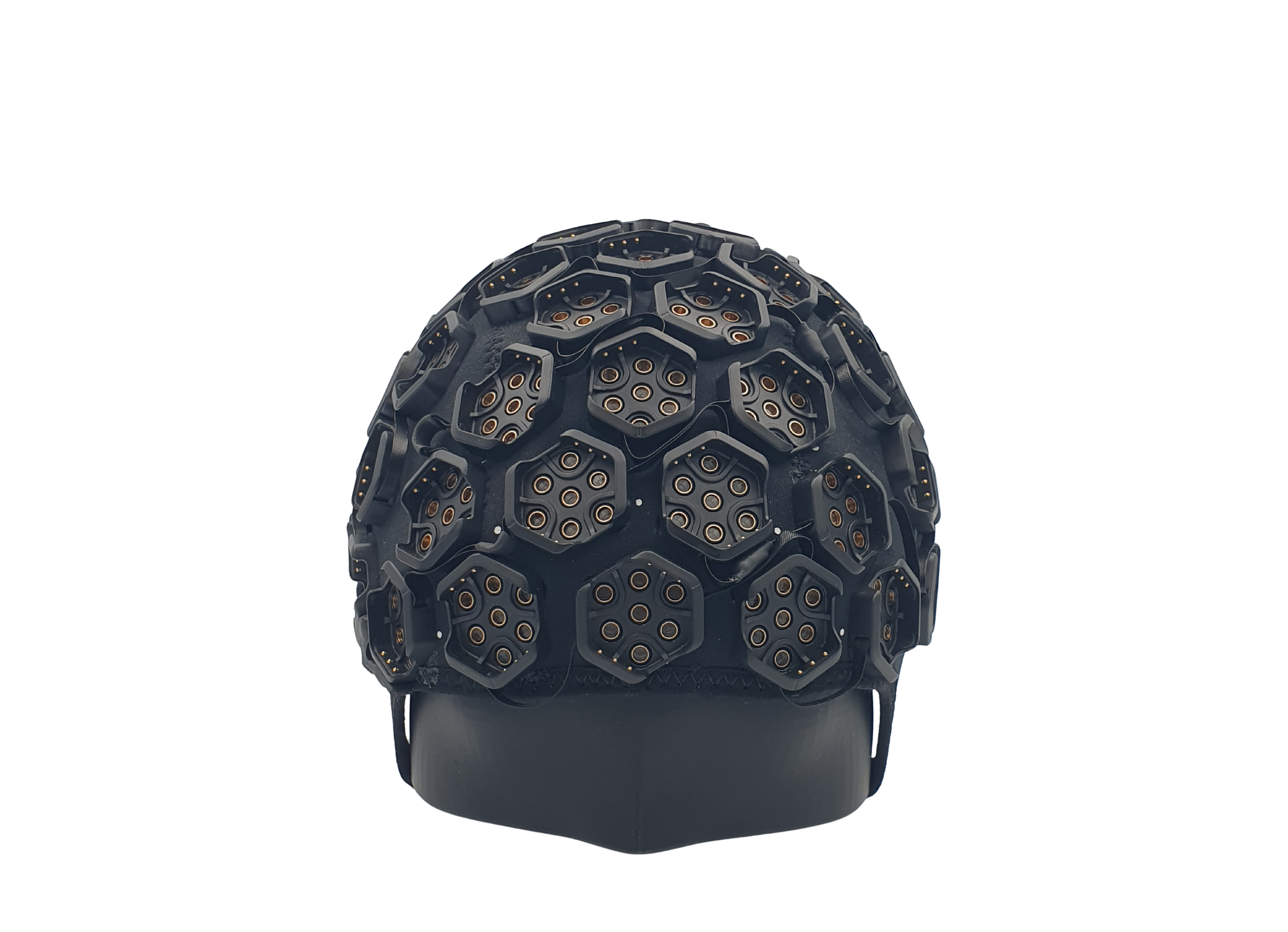
LUMO caps
Made from flexible neoprene with an adjustable chin strap, conforming to all head shapes while ensuring subject comfort
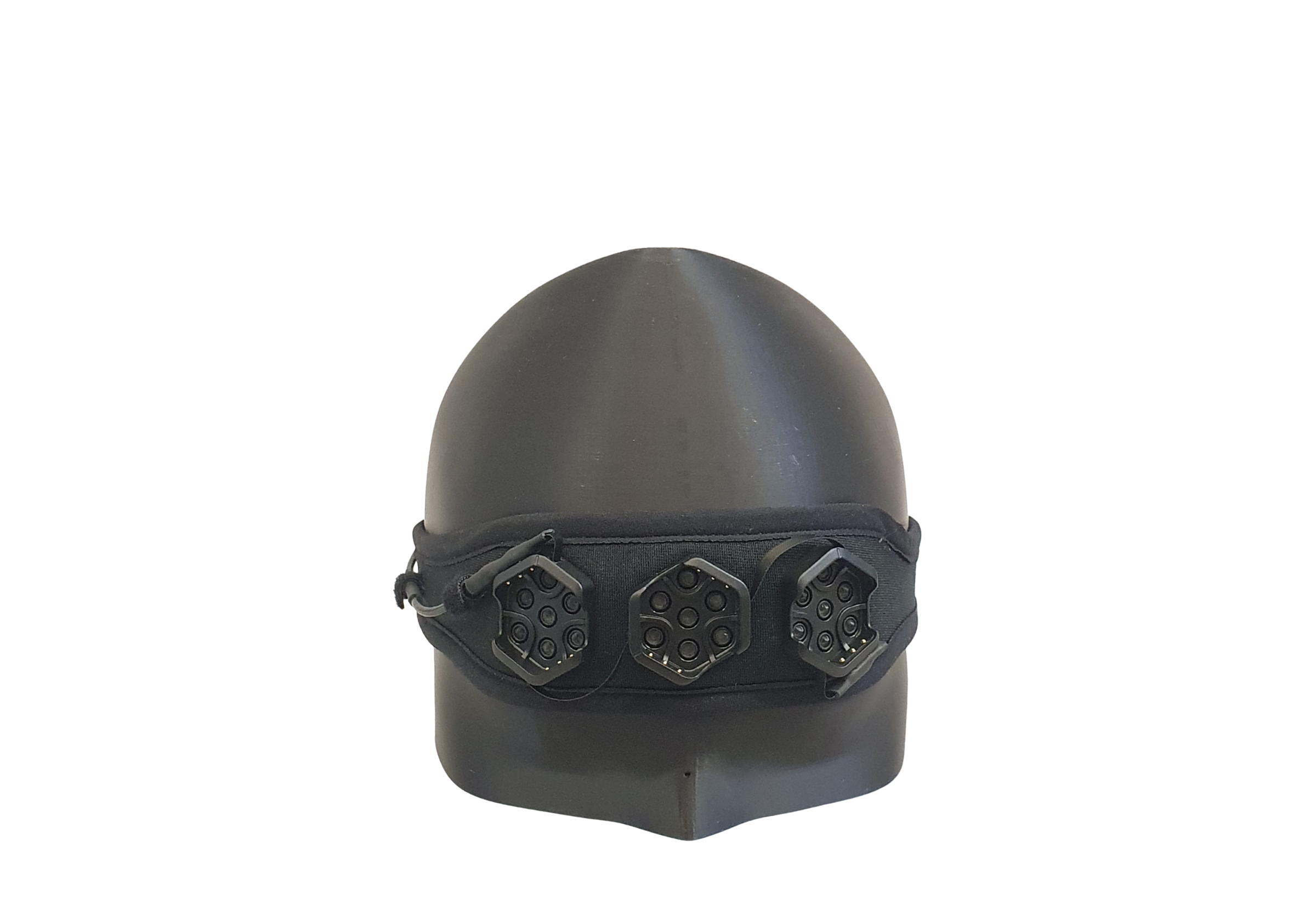
Headbands
Available in 3- or 6-dock configurations, offering a highly adaptable solution ideal for targeted, single-region imaging
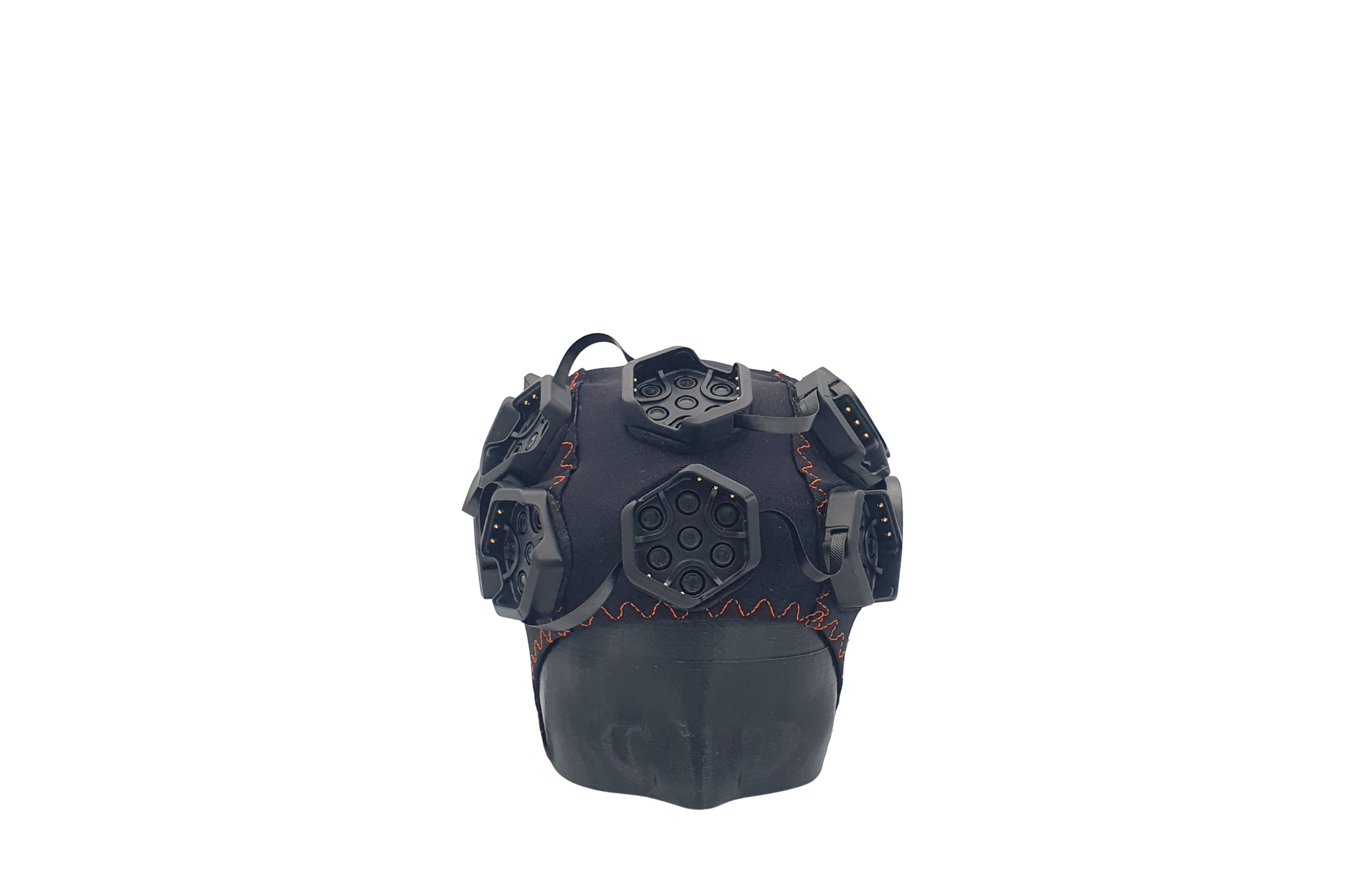
Neonatal caps
Designed using Easycaps for head circumferences under 40 cm, ensuring safe, comfortable, and reliable neonatal imaging
Light guide features
Designed to maximise optical coupling while ensuring subject comfort.
Light guides are completely interchangeable within and between caps, allowing users to customise their setup to optimise performance.
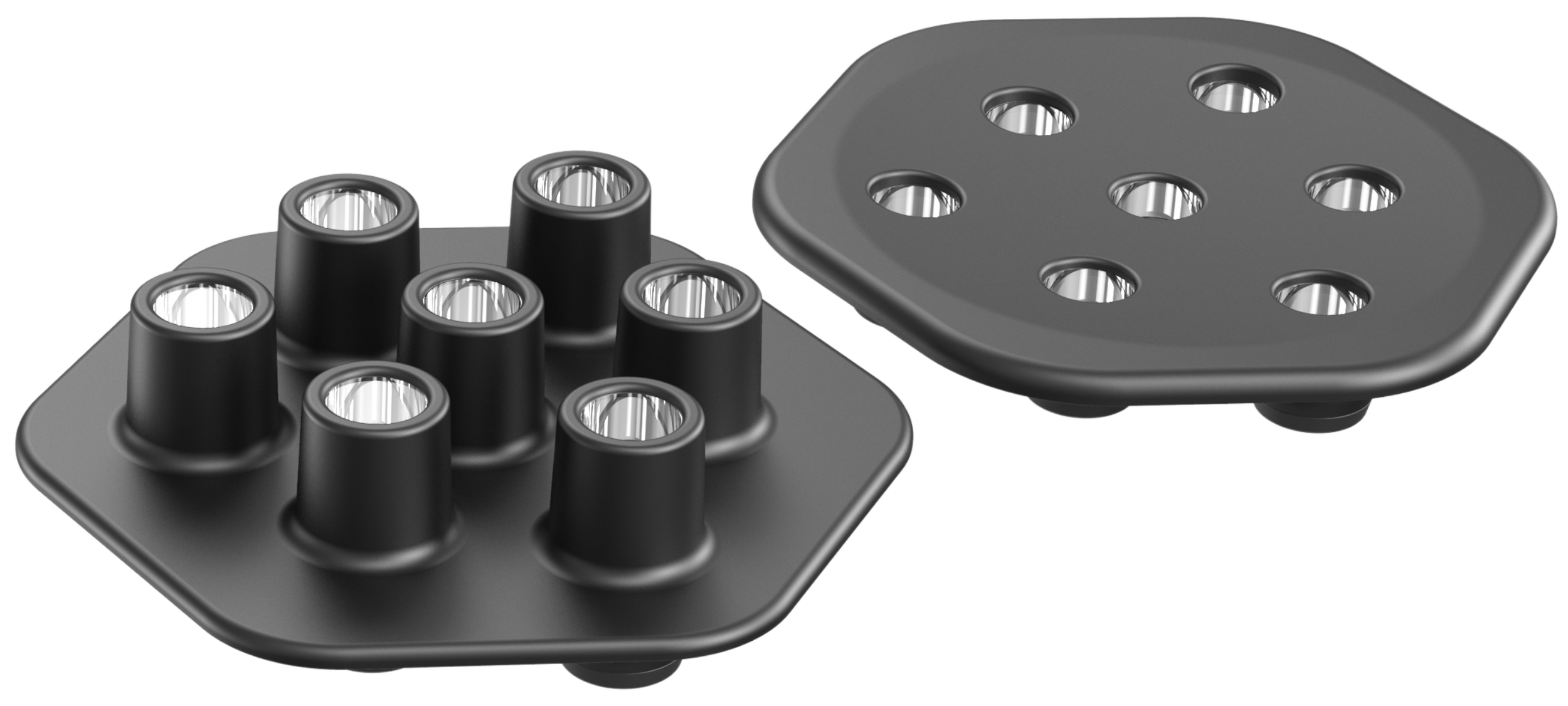
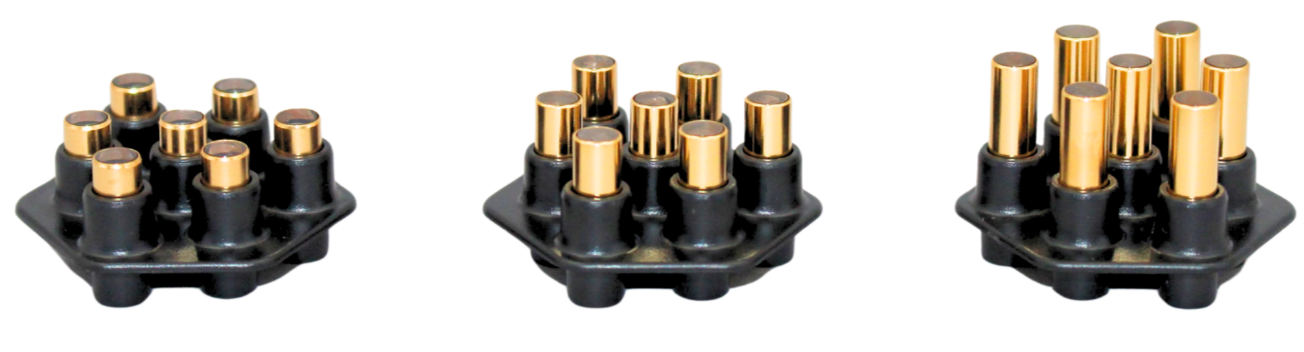
Fixed light guides (flat, 6 mm)
Flat: Features an ultra-low profile that evenly distributes pressure, making them exceptionally comfortable for neonates, subjects with sensitive skin, or participants who are lying down
6 mm: Couples light to regions with moderate amounts of hair, offering good conformance to low-curvature regions
Sprung light guides (short, medium, long)
Independently sprung plastic optical fibres: Enable consistent scalp contact, conforming to different head curvatures and easily combing through hair
Optional silicone pad attachments: Ensure comfort for subjects and regions with little to no hair
Tile features
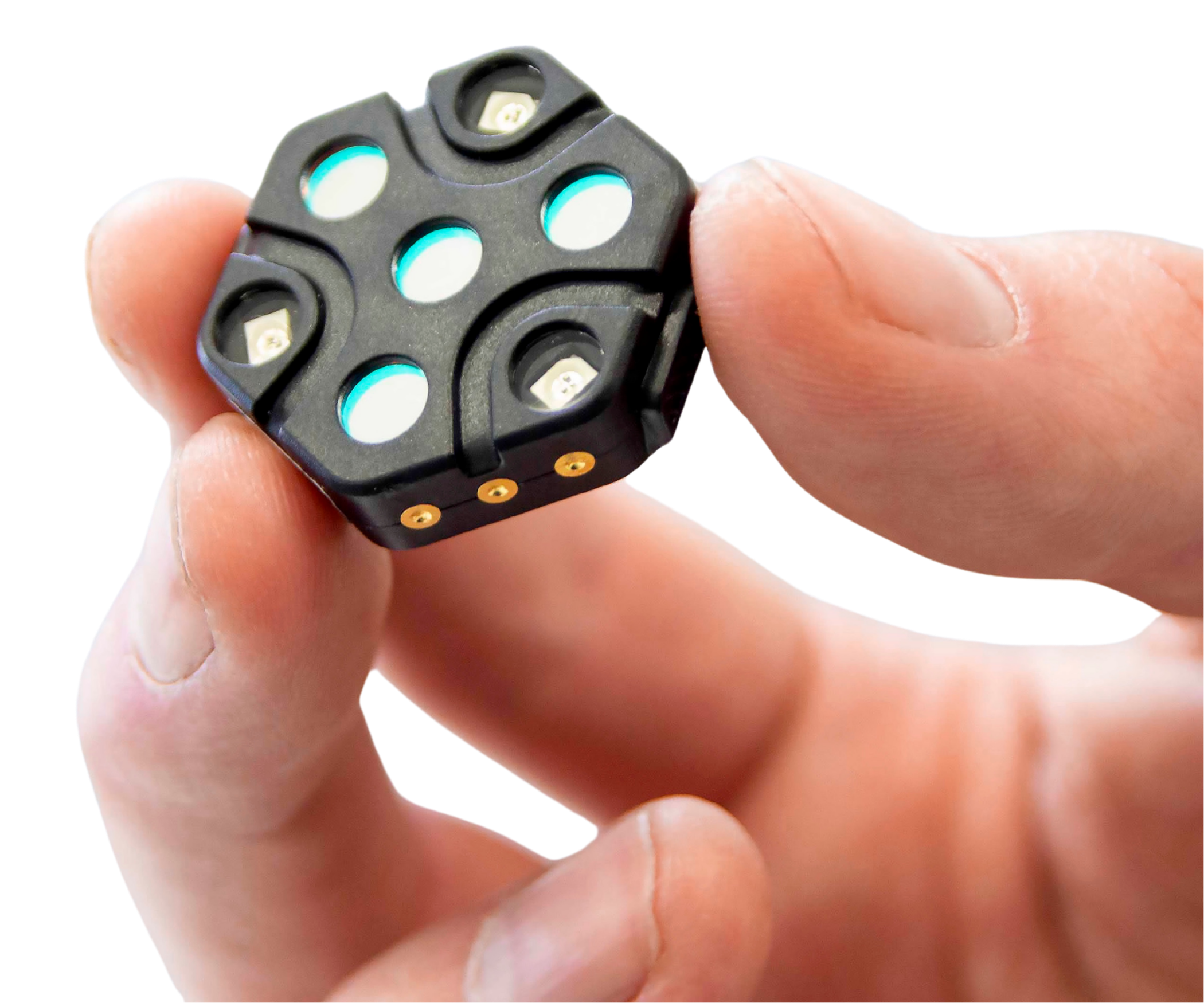
True high-density: 3 dual-wavelength LED sources and 4 silicon PIN photodiode detectors per tile
Multidistance channel range: Intra-tile measurements at 10 mm and 20 mm separation, cross-tile measurements up to 70 mm
Ultra lightweight: Each tile weighs less than 6 g
Anti light-piping design: Prevents surface-level optical cross-talk, ensuring all detected signals reflect true cortical activity
Custom optical filters: Maximise ambient light rejection and minimise occurrences of detector saturation
Modular and ergonomic: Easily movable across docks and caps, making cap setup simple and fast
Integrated motion tracking: A 6-axis Inertial Measurement Unit (IMU) on each tile captures motion data at 100 Hz
Cortical co-registration: Designed to work with 3D positioning systems

Continuous wave (CW) fNIRS/HD-DOT

Adult whole-head cap power dissipation under 12 W
Compact and easy to transport in our custom flight case

Real time streaming of fNIRS and auxiliary data via Lab Streaming Layer