The future of fNIRS.
Available now.
What is LUMO?
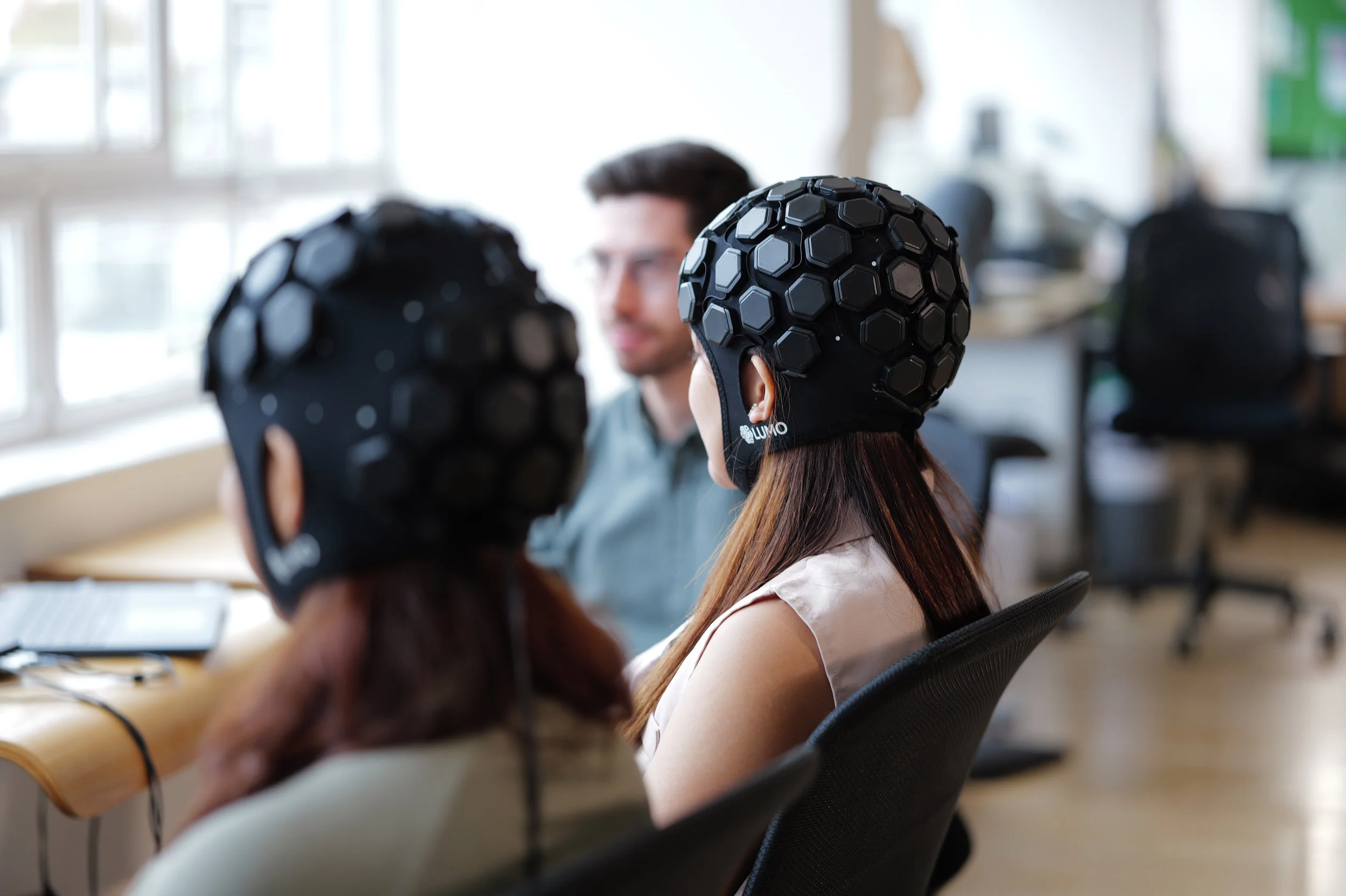
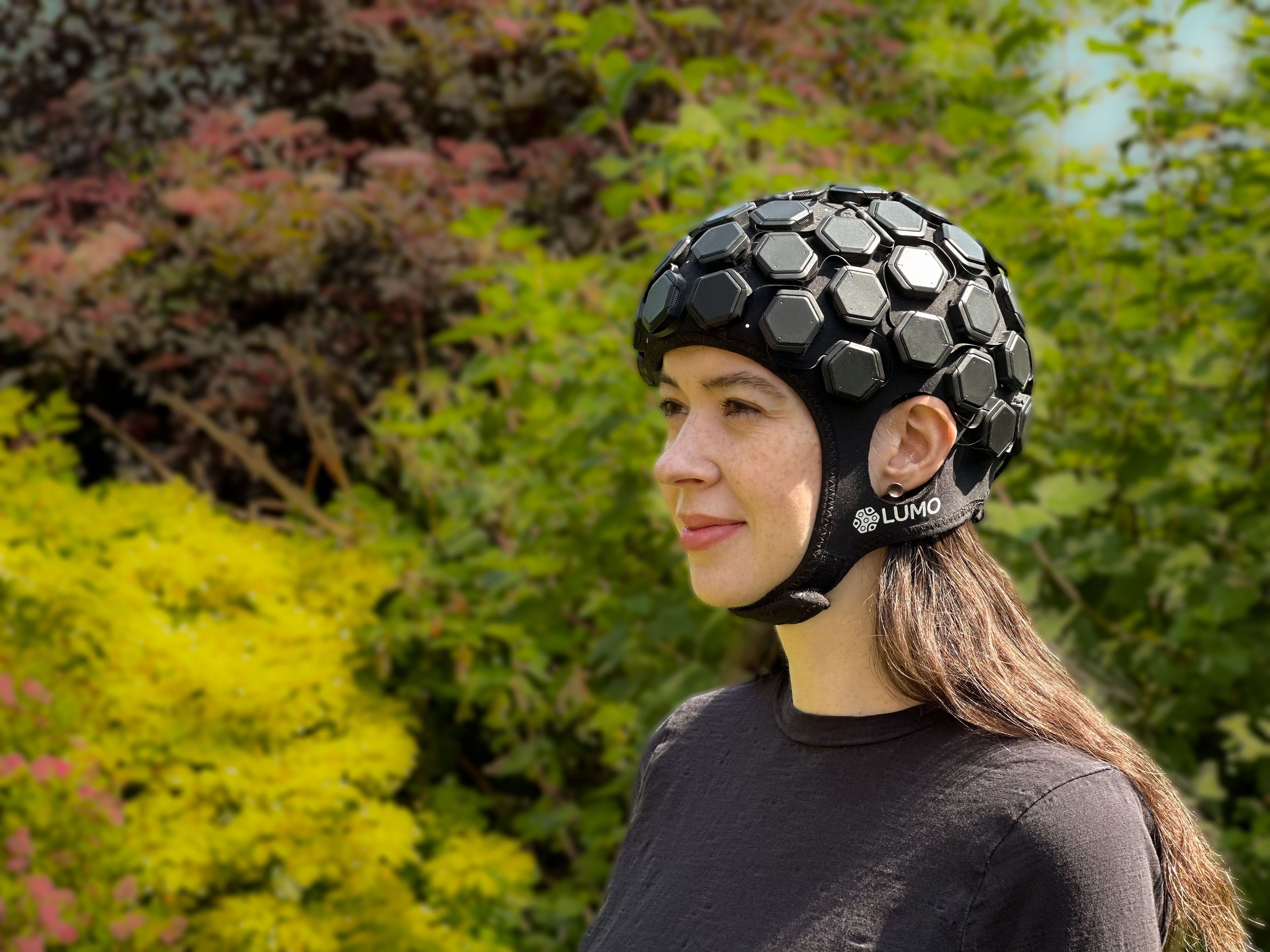
LUMO redefines what is possible with functional neuroimaging. Combining the multi-distance sampling of a diffuse optical tomography (DOT) system with a high-density, fibreless and wearable design, LUMO is the world’s lightest, fastest whole-head HD-DOT system.
Whether you are scanning adults in a lab or infants in naturalistic settings, LUMO's unique modular design scales easily to meet your growing research needs. Bulky fibre and cable bundles are eliminated, reducing setup times, and delivering unparalleled data quality.

Why choose LUMO?

Spatial resolution comparable with fMRI
LUMO dramatically improves spatial resolution and experimental repeatability, ensuring consistent results across every session.
Outstanding comfort and data quality
Stop fighting with fibre bundles, bulky cables and individual optodes. LUMO’s compact headgear can be put on and set up in under 60 seconds.

Unprecedented modularity and flexibility
LUMO’s unique modular architecture allows you to seamlessly expand your system as your research evolves.
How does LUMO work?
LUMO’s ground-breaking modular design features independent hexagonal sensor tiles that can be easily inserted into any cap at any location, to form a high-density DOT array.
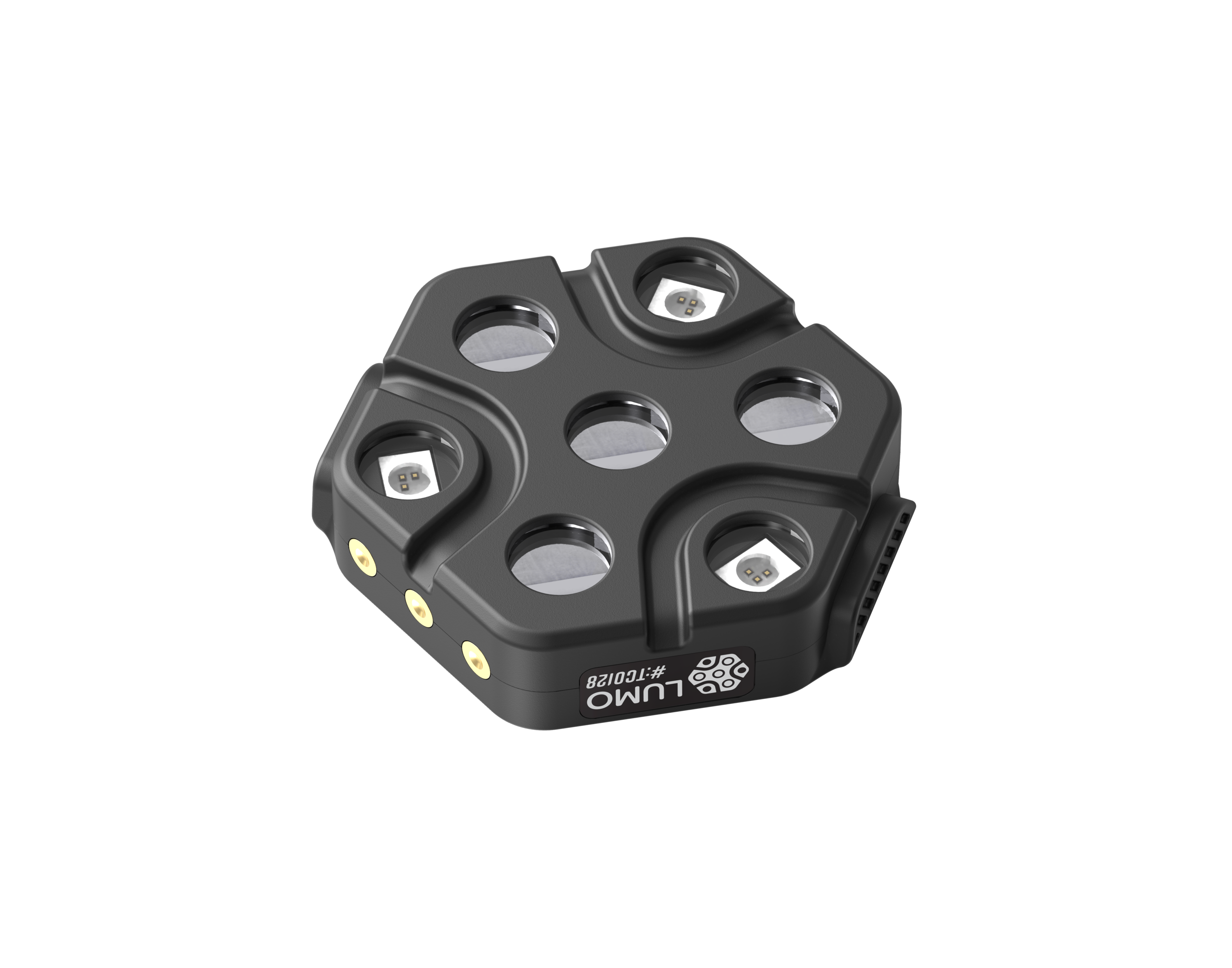
TILES
The heart of LUMO - the sensor modules, each housing 3 dual-wavelength sources and 4 detectors
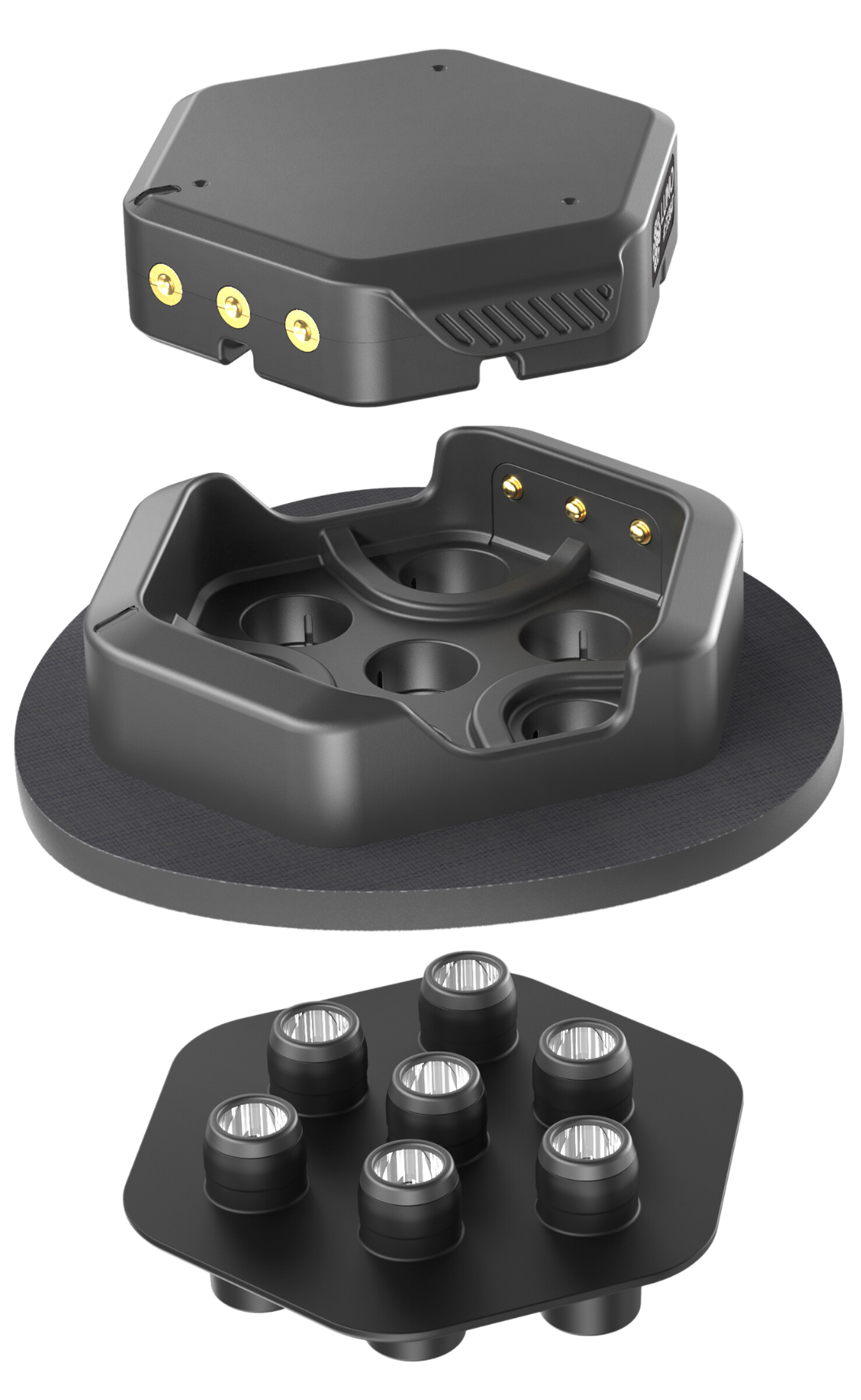
DOCKS
Secured to the cap in your chosen configuration, connected together by low-profile cabling
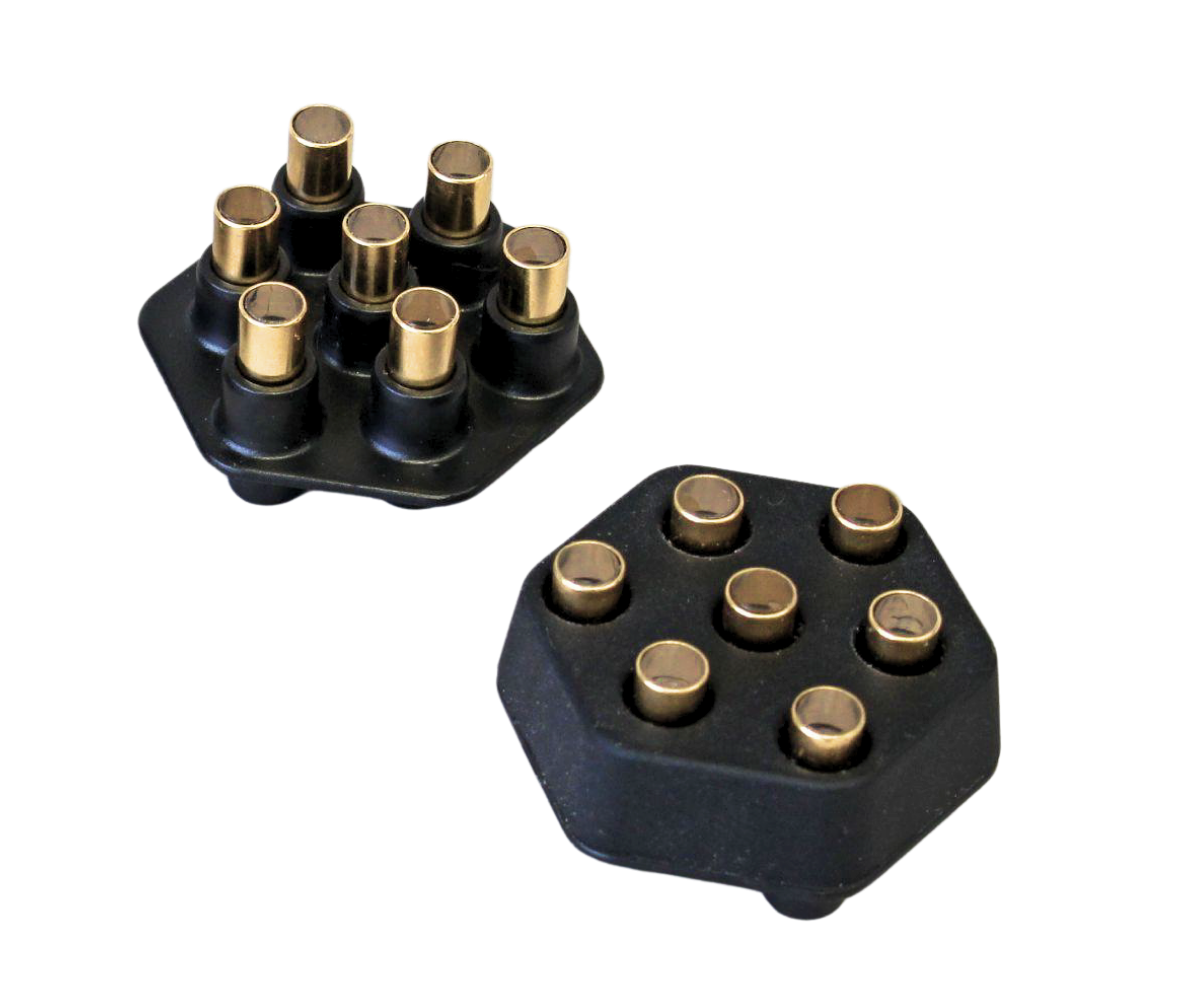
LIGHT GUIDES
Inserted into the underside of each dock to comb through hair
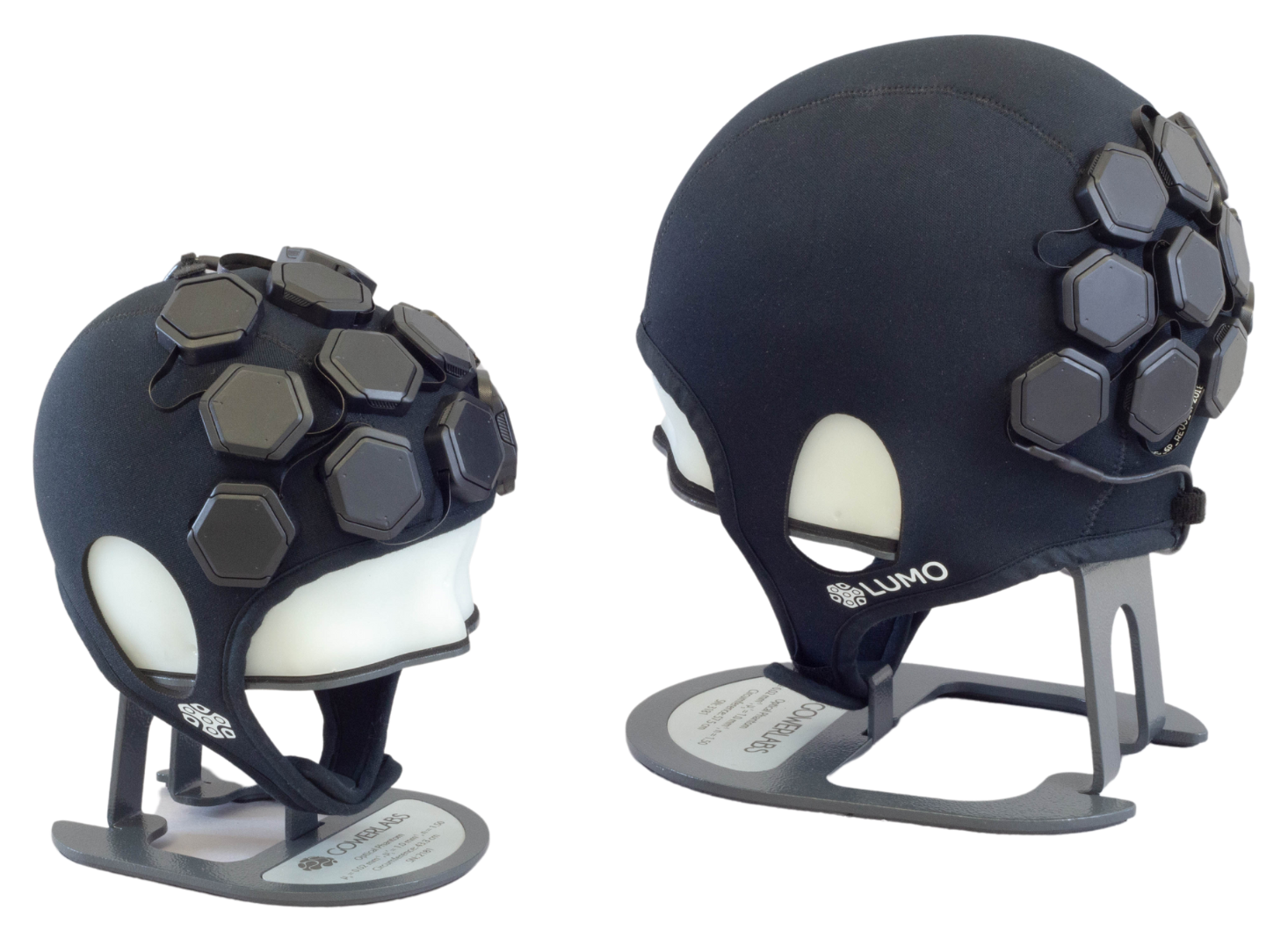
HEADGEAR
Headbands and caps for all ages, from 3 to 54 docks
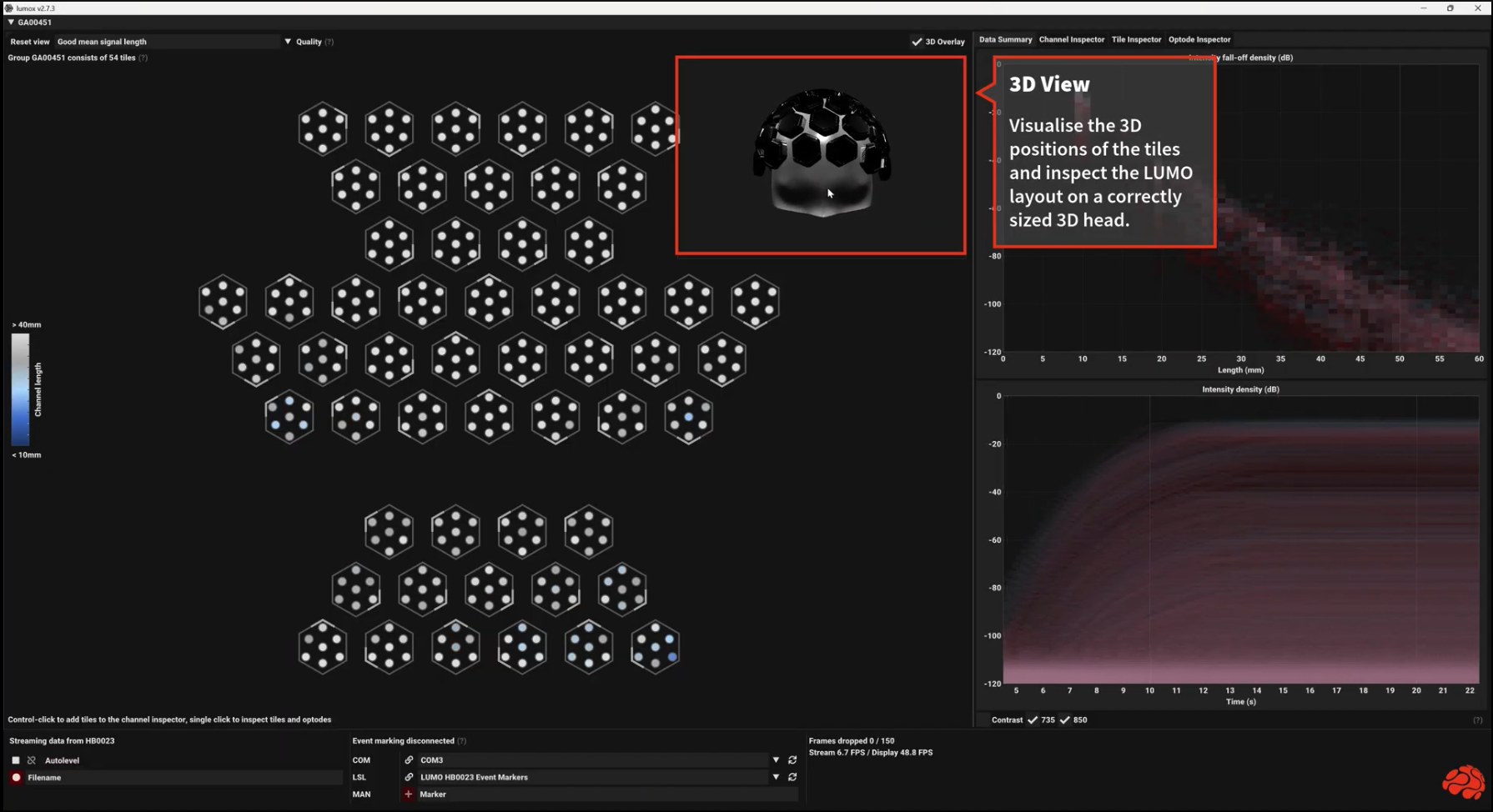
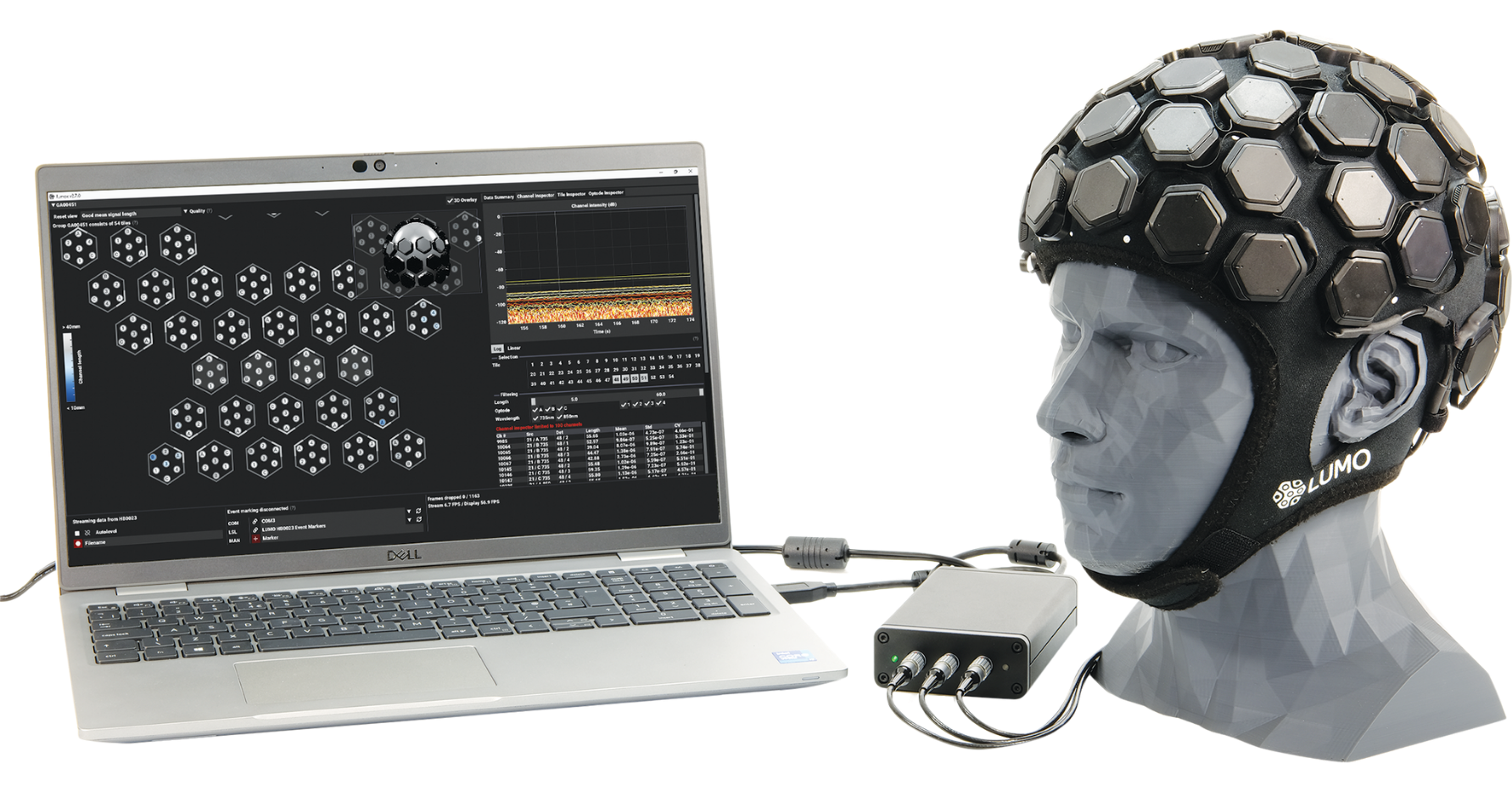
Data acquisition software
Monitor channel quality and channel count in real time. Filter noisy channels with the click of a button, and easily export files for analysis.
Watch our demonstration video to explore its features in more detail.

For all research environments
Since our launch in 2019, LUMO has been used worldwide in infant, child, adolescent and adult populations. A huge range of research includes studies involving functional ultrasound, EEG, tDCS, movement in a VR environment, eye tracking, sleep, and extended recording sessions.

Ready to take your research to the next level?
While fNIRS is a highly valued tool among neuroscientists, psychologists, and clinicians, its true potential is limited by low resolution, uneven cortical sensitivity, and bulky and restrictive hardware. LUMO removes these barriers, offering unparalleled precision in a compact and wearable design.